
Private event software for restaurants
Room pages, an inquiry form, one pipeline, agreements signed online and deposit links paid to your own account. The whole event desk, with no commission on your events.
An event desk spread across five places.
Most restaurants sell parties from an inbox, a notebook and a phone. Every hand-off between them is a place a party can slip.
Planners cannot see the room
One events page covers every space, so a planner looking for a room for 35 has nothing to judge it by.
The deal gets retyped
Minimums and cancellation terms are copied from an old email, and two versions of the deal end up in circulation.
Deposits chased by hand
Card numbers get read over the phone, and somebody has to remember to ask for the balance before the night.
And planners now ask an assistant before they write.
It names a few places that each had a page about their room. A room with no page of its own gives it nothing to quote, which the guide to AI answers explains.
- 1.The lounge above the pizza placePrivate floor for 40, a bartender included.
- 2.The beer hall on Grand StreetLong tables for groups, food platters to share.
- 3.The cocktail bar near the parkBack room for 30, set menus for groups.
One party, three moves.
From the first look at a room to the balance in your account, the party stays on one record.
The planner finds the room
A page for each room, with photos, capacity and an inquiry button, on your own website and your own domain.
The request becomes a record
Date, headcount, room, hours, budget and occasion land in one pipeline, with every message that follows.
The party is signed and paid
An agreement in your wording, signed online, then deposit and balance links paid into your own account.
What an event desk does, and where it breaks
Every restaurant that sells private events runs an event desk, even when the desk is one manager, a shared inbox and a notebook by the host stand. It has five jobs. It shows a planner the room. It takes the request. It keeps track of every open party. It puts the terms in writing. And it collects the money twice: a deposit to hold the date and a balance before the night.
Each job breaks in its own way. The room lives in a photo on somebody's phone. The request arrives as an email with half the details missing. The open parties live in a notebook only one person can read. The terms are retyped from last year's email, and the deposit is a card number read aloud between two tables. Private event software earns the name when all five jobs sit on one record.
The rest of this page follows one sample party through that desk, a 40th birthday for 35 guests, from the page the planner finds to the balance that lands in your account.
Station one: a room page worth saying yes to
The planner starts by looking, usually on a phone, often after asking a search engine or an assistant for a room that fits. One events page listing every space at once gives them little to go on. A page for each room gives them what they need before they write: how many it holds seated and standing, real photos of it set for a party, what comes with it, the occasions it suits and a way to ask about a date.
Pages are written the way planners search, by occasion and by size, and they live on your own site and your own domain, so the visit is yours and so is the guest. The website builder page covers how those pages are built for you, and the restaurant SEO guide explains what Google looks for when it decides which pages to show.
Station two: an inquiry form that asks the right questions
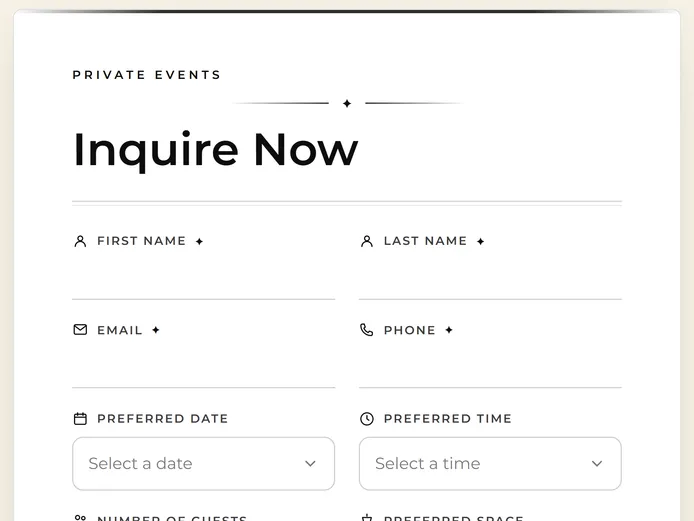
The form is where most parties begin, and the questions it asks decide how much back and forth follows. It asks for the date, the start time, the number of guests, the preferred space, how many hours, a budget and the occasion. The list of spaces fills itself from your rooms, so it matches the rooms you actually sell.
In our sample, the birthday arrives as one complete request: a Saturday, 35 guests, the party room, four hours, a budget and the words "40th birthday". Nobody has to write back to ask the headcount. If the same planner sends the form again with a new number, the second message joins the open request instead of starting a second one.
Requests that arrive another way, through the chat on your site or a message on Instagram or Facebook, are picked up first by Nora, the AI event manager. She answers from the rooms and policies you give her, collects the same details one question at a time and records the request in the same place.
Station three: one pipeline instead of a notebook
Every request, however it arrived, sits in one pipeline with its date, headcount and room. Stages show where each party stands: New, Needs Response, Team Responded, Proposal Sent, Booked, Lost or Canceled. Read it as a list or drag cards across a board, with upcoming and past events on tabs of their own.
Filters narrow the list by stage, room and date. Before your manager promises the party room for that Saturday, a single filter shows every open request for the same room that week, so you can see whether the date is already spoken for.
If planners who go quiet should hear from you again, switch on follow-up emails. By default they go out at 2, 5 and 10 days, in words you write, and stop as soon as the guest replies or the date passes. The Tableify CRM page covers the record keeping behind the pipeline in full.
Type your restaurant's name. The free report shows how you come up on Google and in AI answers, next to the places near you.
Station four: the agreement, in your own words
When the birthday is ready to book, your team sends a branded invoice from the same record, then an event agreement. The agreement uses your own wording, with your cancellation terms and house rules, and pulls its figures from the invoice so the numbers on the two never disagree.
The planner signs it online, and a signed copy is kept as a PDF on the record. No printing, no scanning, and no hunting through an email thread in the spring to find what was agreed in the fall. If a question comes up on the night itself, the signed terms are a tap away.
Station five: deposit and balance, straight to your account
A deposit link follows the agreement, and the planner pays it online. Nobody reads a card number over the phone, and nobody writes one on a sticky note by the register. The balance link can be scheduled to go out on its own date, a week before the party for example, so nobody on your team has to remember to chase it.
The money goes to your own payment account, never through ours, and we take no commission on the event, the deposit or the final bill. A December full of parties does not make our bill any bigger. The payments, the messages, the signed agreement and the original request all belong to the same party, so the whole event, start to finish, is in one place.
Five months of the desk at one beer garden
Loreley Beer Garden on the Lower East Side runs its event desk this way. From May 1 to September 30, 2026, it logged 1,163 party inquiries, and 281 of them booked, about one in four. The event value recorded on those bookings came to $326,963: the final spend the team confirmed where there was one, otherwise the value entered, the guest's budget or the headcount times a per-guest amount.
The months were not even, which is normal for event sales. May brought 211 inquiries and 63 bookings. July was the quietest month, with 179 inquiries. September was the busiest of the five, with 338 inquiries and 83 bookings. The chart below shows every month, and the case study shows how each number was counted.
Questions to ask before you pick an event tool
Event software is easy to demo and hard to leave, so ask the plain questions first. These decide whether a tool runs your desk or quietly takes a cut of it.
Table bookings are a different sale, with their own questions. They run from the booking button on your site through Tableify reservations, and the reservation system checklist lists what to ask about that side.
- Does it take a percentage of deposits, invoices or the event total, or charge one flat price?
- Do room pages live on your own website and your own domain?
- Can the planner sign the agreement online, in your own wording?
- Do deposits and balances go straight to your own payment account?
- Can the balance go out on its own date, so nobody has to chase it?
- Does every request, from every channel, end up on one record?
Five months of one event desk, month by month.
Loreley Beer Garden sells its private rooms through room pages, one pipeline, agreements and deposit links. These are its figures from May 1 to September 30, 2026; the case study shows how each was counted.
Every request, through the form, chat, email, phone or messages, counted once.
About one in four of those inquiries went on to book a date.
The value recorded on those 281 bookings, over five full months.
Over five months in 2026, one beer garden turned 1,163 party inquiries into 281 bookings worth $326,963.
Party inquiries at Loreley Beer Garden by month, and the part that booked.
See the numbers
| Month | Inquiries | Booked | Event value |
|---|---|---|---|
| May | 211 | 63 | $71,265 |
| June | 194 | 45 | $45,395 |
| July | 179 | 42 | $52,366 |
| August | 241 | 48 | $52,593 |
| September | 338 | 83 | $105,344 |
| Total | 1,163 | 281 | $326,963 |
“I had a birthday celebration and private reserved the downstairs space on a Wednesday … They were so accommodating and lovely. Had excellent large food platters to share. … I’d definitely recommend having your next get together here.”Guest at Loreley Beer Garden, Google review, March 2026
Everything the desk needs, in one login.
Each piece works on its own and better with the others. Our team sets it all up for you.
A page for every room
Capacity, photos, what is included and an inquiry button, written the way planners search.
An inquiry form that asks
Date, time, guests, room, hours, budget and occasion, with the rooms taken from your own list.
Nora on first messages
The AI event manager answers chat and social messages from your rooms and policies, then hands over.
One pipeline, every stage
New to Booked, as a list or a board, filtered by stage, room and date.
Agreements signed online
Your own wording, figures pulled from the invoice, and a signed PDF kept on the record.
Deposit and balance links
Paid into your own account, with the balance scheduled for its own date. No commission.
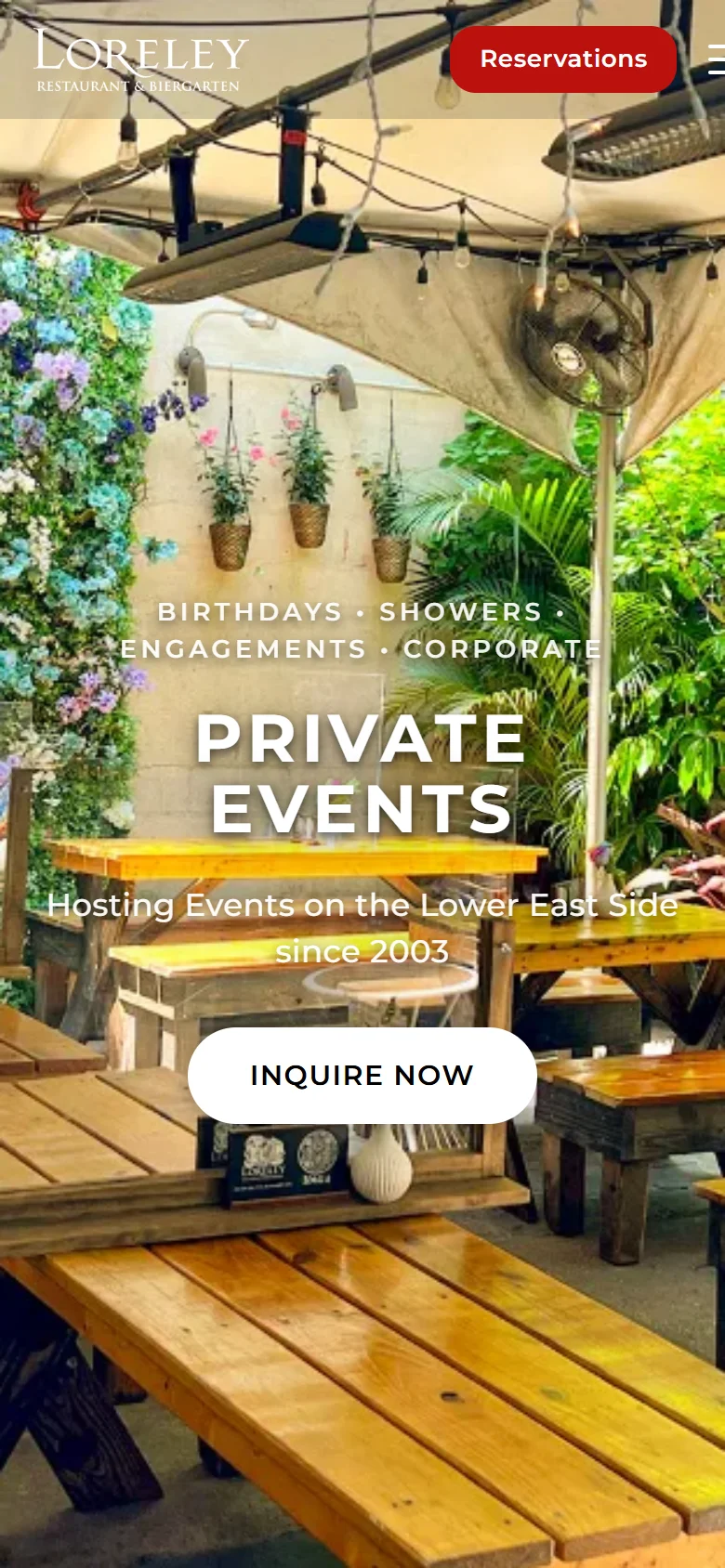
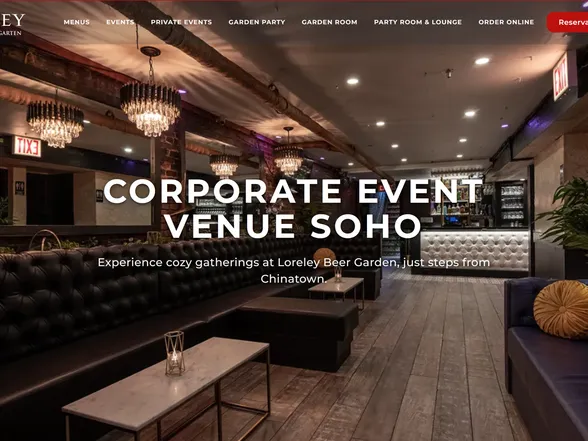
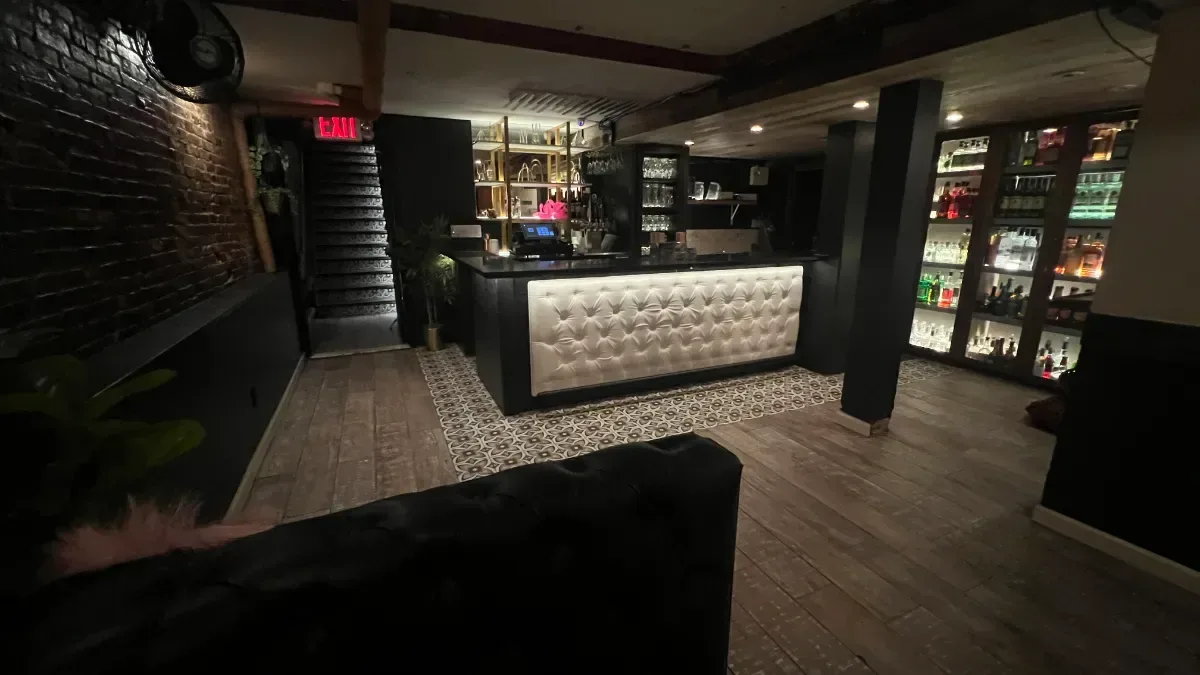
The desk at one beer garden
A room page, the form behind it and the room itself, from Loreley Beer Garden in New York.
A flat price. The party money stays yours.
- No percentage of event totals, deposits or invoices.
- Deposits and balances land in your own payment account.
- One flat monthly price, no long contract.
Questions about private event software
What is private event software for a restaurant?
It is the set of tools that runs a restaurant's event desk: pages that show each room, a form that captures the request, a pipeline that tracks every open party, an agreement the guest signs and the links that collect the deposit and the balance. Good software keeps all of it on one record. Tableify puts those pieces beside your website and reservations, with no commission on your events.
How do I take a deposit for a private party?
Send a deposit link from the party's record once the agreement is signed, and the planner pays online. The money goes straight to your own payment account. Schedule the balance link for its own date before the event, so nobody has to chase it. No card number is read over the phone or written down.
Can guests sign an event contract online?
Yes. The event agreement uses your own wording and pulls its figures from the invoice, so the two always match. The planner signs it online, and a signed copy is kept as a PDF on the record. You can open it in seconds when a question comes up later.
What should a private event inquiry form ask?
Enough to quote without a second email: the date, the start time, the number of guests, the room they want, how many hours, a budget and the occasion. Ask for a name and a way to reach them first. Tableify's form asks exactly those, with the room list filled from your own rooms. A planner who writes twice is merged into the open request instead of becoming two.
Do you take a commission on private events?
No. We never take a percentage of your private events, deposits or invoices. You pay one flat monthly price for the plan, and guests pay into your own payment account. A busy December does not make your bill from us any bigger.
How much event business can one restaurant run this way?
The beer garden in our case study runs its whole event desk on Tableify. From May through September 2026 it logged 1,163 party inquiries and booked 281 parties, with $326,963 in event value recorded on those bookings. Every inquiry was counted once, whichever way it arrived. The case study breaks it down month by month.
What does the AI event manager do on the event desk?
Nora picks up first messages on your website chat, Instagram and Facebook and, once your own texting number is approved, texts. She works from the rooms, menus and policies you give her, collects the party's details and records the request in your pipeline. Your team takes it from there: the quote, the agreement and the deposit. The AI event manager page covers her in full.
How long does it take to set up?
Our team sets it up for you in two to four weeks: the room pages, the inquiry form, the pipeline, Nora's knowledge of your rooms and policies, and your own payment account for deposits. You approve the pages before they go live. From then on, every new request lands in one place instead of five. The fit checklist shows which pieces to start with.
One desk for every party.
See how planners nearby find a private room on Google and in AI answers, and whether your rooms show up. Free, about a minute.